
News viewership was the biggest gainer during the first full week of lockdown, growing 298 per cent versus the pre-COVID period between January 11 and 31. Ramayana, whose rerun has begun on Doordarshan, was the top-rated show on Saturday and Sunday.

Even as most manufacturers are still assessing the overall impact on their businesses, early projections suggest the market may grow at its lowest ever rate, in 2020.

The usually busy Greater Noida expressway is empty except small groups of commuters that gather at its sidelines, seeking lift from every passing vehicle.

Cancellation of at least Rs 3,000-crore worth of business has happened in the past few weeks.
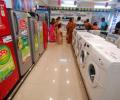
In 2020 a round of hikes in customs duty on components like compressors, motors and printed circuit boards aggravated the situation, coronavirus crisis is now leaving manufacturers with no option but to hike prices despite fall in sales.
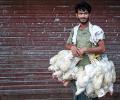
Weak demand from the poultry sector has resulted in a sharp decline in feed prices too, with both soybean and maize prices falling by nearly 25 per cent in the past two months. The poultry market consumes around half of soybean and maize production in India.

The delay of the SE 2, billed as the cheapest iPhone and tentatively priced below Rs 40,000 in India, puts the brakes on the tech major's plans for a revival. With the supply chain at its largest manufacturer Foxconn in disarray, as it is struggling to operate in China because of the COVID-19 crisis, the postponement was inevitable.

'There is a clear business impact. People are avoiding crowded places and gatherings across cities. This is hitting business, both at traditional and modern trade outlets, during the Holi season, which kicked off from Saturday,' says Praveen Khandelwal, general secretary, Confederation of All India Traders (CAIT).

While 100 per cent FDI is allowed in single-brand retail, if the foreign investment exceeds 51 per cent, the 30 per cent mandatory local sourcing norm kicks in.

From the rollback of customs duty on key electronic components to fast tracking delivery of goods imported from China, players are looking for incentives on several counts.

While the outbreak has forced most leading brands like Apple, Xiaomi, Oppo, Vivo, and Realme to rework their launch dates and pricing strategies, Samsung, which struggled to maintain its hold over the market last year, has taken the lead.

RIL's stake in Network18 would reduce to 64 per cent, from 75%, following the merger
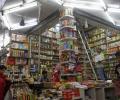
The first to see price hikes will be soaps. In the past six months, domestic palm oil prices have increased by 46 per cent. Palm oil is a key input going into soaps.
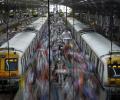
Launched by the ministry of housing and urban affairs, the ease of living index (EoLI) is aimed at providing a holistic view of the country's cities. These will be done on parameters like services provided by local bodies, effectiveness of the administration, outcomes generated through those services in terms of liveability and citizens' perception of the outcomes.

But it may come with a downside risk of further rise in prices of several products.

Experts feel that mall owners anticipate an increase in costs to the tune of 15-20 per cent annually, prompting a mixed response to the '24 hours' initiative. A mall owner said while the policy is good in spirit, implementing it would be a challenge as night shopping or eating out wasn't a habit in Mumbai yet.

'As long as people are eating we will be there,' Rebel Foods CEO Jaydeep Barman tells Viveat Susan Pinto and Niraj Bhatt.

Used since 1984 when late Rajiv Gandhi became the PM, the current residence was built over 12 acres of land, based on designs by New Delhi's chief architect Edwin Lutyens. However, with a new redevelopment blueprint on the table, the PM's residence is now expected to move to the South-West corner, behind South Block on Raisina Hill. Arnab Dutta reports.

Its proximity to popular tourist destinations like Agra, which attracts 45 per cent of the international passenger traffic at IGI, could be diverted to Jewar.

While Unilever has been aggressive, both organically and inorganically in the country, P&G's approach has been about achieving 'balanced growth' in terms of top line and bottom line.
 © 2025 Rediff.com - Investor Information - Advertise with us - Disclaimer - Privacy Policy - Sitemap - Feedback - About us - Terms of use - Grievances